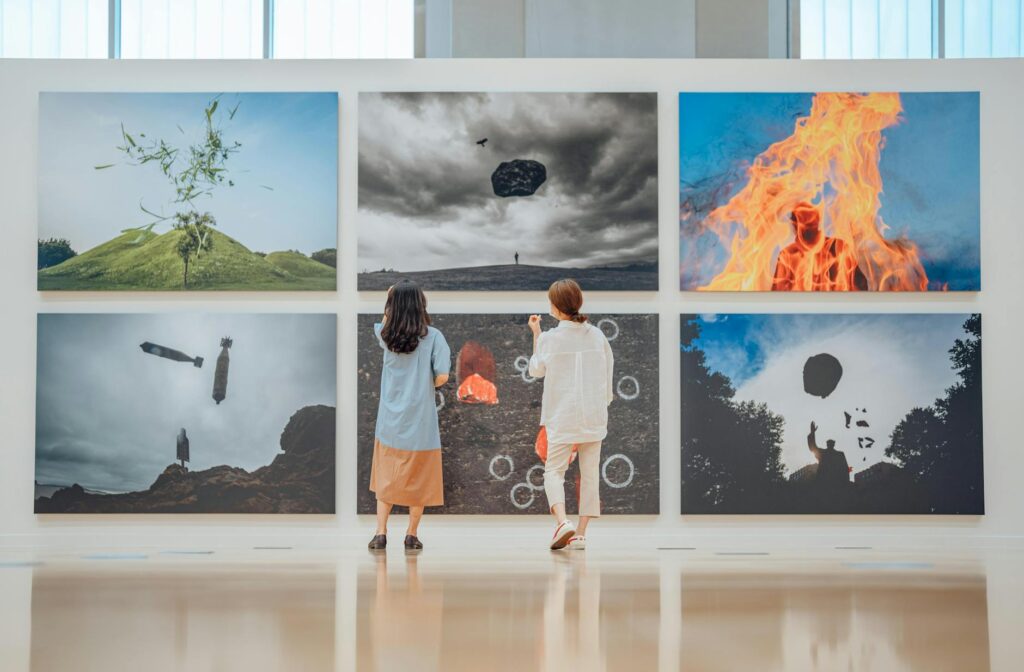
See Contemporary Art Examples Now
Honestly, the phrase “contemporary art” can conjure up images of anything from a banana taped to a wall to a blank canvas that supposedly cost millions. It’s easy to feel a bit lost, or even dismissive, when you’re just trying to figure out what exactly you’re looking at. But here’s the thing: contemporary art is happening right now. It’s a reflection of our complex, messy, and often beautiful world, created by living artists working with ideas and mediums that are as current as your smartphone.
Last updated: April 26, 2026
This isn’t some stuffy museum piece from centuries ago. Here’s art being made in your lifetime. And understanding it, even at a basic level, can be incredibly rewarding. It’s about seeing the world through new eyes. Forget the jargon for a minute. Let’s look at some concrete contemporary art examples and break down what makes them tick, and what you might want to look for yourself.
Latest Update (April 2026)
As of April 2026, the contemporary art scene continues to evolve at a rapid pace, driven by technological advancements and global dialogues. Exhibitions like those highlighted by Artsy and The Art Newspaper in late 2025 and early 2026 showcase a dynamic range of new works and artistic trends. For instance, the proliferation of sculpture parks, as noted by The New York Times, signifies a growing interest in making art more accessible and integrated with natural environments. Meanwhile, major art events like Miami Art Week, extensively covered by Artsy and The Art Newspaper, continue to be Key platforms for emerging and established artists, reflecting the latest developments in painting, digital art, and immersive installations. This ongoing vibrancy highlights the relevance and ever-expanding definition of contemporary art today.
What Does ‘Contemporary Art’ Actually Mean?
Simply put, contemporary art refers to art made in the present day. It’s art created from the late 20th century (roughly the 1970s or 80s) up to this very moment in April 2026. It’s distinct from modern art — which typically covers the period from the 1860s to the 1960s. Contemporary art is the art of our time, reflecting current issues, technologies, and cultural shifts. It’s incredibly diverse, encompassing painting, sculpture, photography, video, installation, performance, and digital media. The ideas behind the work are often as important, if not more so, than the physical object itself.
Why Contemporary Art Examples Are So Diverse
The sheer variety you see in contemporary art isn’t a bug. It’s a feature. Artists today have access to more materials, technologies, and global influences than ever before. They’re not confined by traditional mediums or subject matter.
This freedom leads to a vast range of styles and approaches. Think about it: an artist in Lagos, Nigeria, might be creating hyperrealistic portraits that comment on social media, while another in Berlin might be building intricate sculptures from recycled materials that address environmental concerns. Both are contemporary art examples, but they look and feel entirely different.
The globalization of the art world means that artists are in constant dialogue with diverse cultural perspectives. This cross-pollination results in hybrid forms and novel interpretations of established genres. And — the digital age has democratized the creation and dissemination of art, allowing artists to experiment with new tools and reach wider audiences without necessarily relying on traditional gatekeepers like galleries or museums. Reports indicate a surge in artists utilizing online platforms for both exhibition and sales, blurring the lines between creator, curator, and consumer.
Contemporary Art Examples You Can Actually See (and Understand!)
Let’s get specific. Instead of just talking in the abstract, let’s look at some artists and types of work that exemplify what’s happening now.
Installation Art: Immersive Worlds
Installation art is exactly what it sounds like: art that’s installed in a space, often transforming it entirely. It’s not just something you look at. It’s something you can often walk through or around. These pieces can be made from anything – light, sound, video, found objects, even water. The experience is key.
A prime example is Yayoi Kusama’s famous ‘Infinity Mirrored Rooms’. You step into a small room filled with mirrors and lights, and suddenly you’re in an endless, dazzling universe. It’s not just a painting. It’s an environment designed to evoke a feeling or idea.
Another strong example is Olafur Eliasson’s work, like ‘The Weather Project’ at the Tate Modern in 2003 — where he created a giant, artificial sun in the Turbine Hall. People weren’t just looking at art. They were experiencing a simulated environment. More recent iterations of immersive installations continue this trend, with artists creating works that engage multiple senses and encourage physical interaction.
As The New York Times recently reported, the rise of sculpture parks also reflects an evolution in how art is presented, moving beyond traditional gallery walls into curated outdoor spaces. These parks often feature large-scale installations that interact with the natural landscape, offering visitors a unique, site-specific experience. This trend highlights a broader movement towards making contemporary art more accessible and integrated into daily life.
Street Art: From Walls to Galleries
Once considered vandalism, street art has exploded into the mainstream art world. Artists like Banksy, Shepard Fairey (creator of the iconic “Hope” poster), and JR use public spaces as their canvas. Their work is often political, socially charged, and accessible to a broad audience.
Banksy’s stencils, often appearing overnight on city walls, are instantly recognizable and frequently carry sharp social commentary. Shepard Fairey’s graphic style, blending fine art and commercial design, has become globally iconic. JR, a French artist, is known for his large-scale photographic murals pasted on buildings in cities worldwide, often highlighting marginalized communities. The transition of street art into high-end galleries and auction houses is one of the most significant shifts in contemporary art examples.
The influence of street art is undeniable, with its bold aesthetics and direct messaging resonating with a global audience. Many contemporary artists who started in street art continue to push boundaries, incorporating its energy and social consciousness into more traditional mediums. This fusion often results in works that are both visually striking and intellectually engaging, bridging the gap between subculture and high art.
Digital Art and New Media
Here’s where technology really shines. Digital art encompasses everything from computer-generated imagery and digital painting to interactive installations and virtual reality experiences. Refik Anadol, for instance, uses vast amounts of data – like public archives or environmental information – and transforms it into stunning, large-scale public art installations using machine learning algorithms. His work ‘Machine Hallucination’ at MoMA PS1 in 2019 used archival images of New York City to create a mesmerizing, ever-changing visual stream. Or consider artists working with AI, creating art that learns and evolves.
The field of digital art is constantly evolving, mirroring the rapid advancements in technology. Virtual and augmented reality are opening up new frontiers for artistic expression, allowing for completely immersive and interactive experiences that were unimaginable just a few years ago. NFTs (Non-Fungible Tokens) have also profoundly impacted the digital art market, providing new ways for artists to authenticate, own, and sell digital creations. According to recent industry reports, the digital art market, including NFTs, has seen significant growth and diversification, attracting both collectors and artists.
Artists are increasingly ethical and aesthetic implications of AI in their work. This includes questioning authorship, exploring algorithmic bias, and using AI as a creative partner. The outputs can range from abstract visual patterns to complex, narrative-driven experiences. This area represents a frontier where art, science, and philosophy intersect, prompting critical questions about creativity in the age of intelligent machines.
Performance Art: The Ephemeral Experience
Performance art is a live art form where the artist’s own body and actions become the medium. It’s often ephemeral, existing only in the moment of its creation and presentation. Artists like Marina Abramović are pioneers in this field, known for endurance-based performances that explore the limits of the body and mind. Her work often involves intense physical and psychological challenges, inviting the audience to contemplate themes of pain, resilience, and connection.
Contemporary performance artists continue to push boundaries, often incorporating elements of theatre, dance, and everyday life into their work. Some performances are highly choreographed, while others are more improvisational, responding directly to the environment and audience. The rise of online streaming and virtual platforms has also opened new avenues for performance art, allowing artists to reach global audiences in real-time, even if they’re physically distant. This adaptability showcases the genre’s enduring relevance in a digitally connected world.
Socially Engaged Art: Art with a Purpose
This category of contemporary art focuses on social and political issues, often involving collaboration with communities. Artists working in this sphere aim to create dialogue, build social change, or address specific community needs. For example, Theaster Gates, an artist and urban planner, uses art to revitalize neglected neighborhoods, creating community centers and public spaces through his projects.
These projects often require significant community engagement, research, and a deep understanding of the social context. The impact can be tangible, leading to improved public spaces, increased community cohesion, or raised awareness about critical issues. This form of art challenges the traditional notion of the artist as a solitary genius, emphasizing instead the power of collective action and collaborative creation.
Pros of Engaging with Contemporary Art
- Offers fresh perspectives on current issues and societal dynamics.
- Reflects the diverse cultural and technological world of today.
- Uses innovative technologies, materials, and interdisciplinary approaches.
- Can be highly engaging, interactive, and experiential.
- Provides opportunities for critical thinking, dialogue, and personal reflection.
- Connects viewers to the pulse of current artistic innovation and expression.
Cons or Challenges of Engaging with Contemporary Art
- Can sometimes be perceived as inaccessible, elitist, or overly conceptual without context.
- Requires an open mind and a willingness to question traditional aesthetics and established norms.
- The contemporary art market can be volatile, subjective, and challenging for newcomers to navigate.
- Defining its artistic and monetary value can be complex due to its experimental nature.
- historical and theoretical underpinnings can sometimes be necessary for full appreciation.
The ‘Why’ Behind the Work: Conceptual Art
A huge part of contemporary art is the idea or concept behind it. Conceptual art — which gained prominence in the 1960s and 70s but remains vital today — prioritizes the idea over the aesthetic object. Think of Marcel Duchamp’s ‘Fountain’ (a urinal signed ‘R. Mutt’) from 1917 – it’s a foundational piece that questioned what art even is.
Contemporary examples abound. Damien Hirst’s “The Physical Impossibility of Death in the Mind of Someone Living” (1991), a tiger shark preserved in formaldehyde, is a stark exploration of mortality. Hirst, a prominent figure in the Young British Artists (YBAs) movement, often uses shock value and conceptual depth to provoke thought about life, death, and consumerism. His work, while sometimes controversial, exemplifies how contemporary artists use unconventional materials and bold ideas to address profound themes.
Another significant conceptual artist is Ai Weiwei, whose work often critiques political power and advocates for human rights. Pieces like “Sunflower Seeds” (2010), an installation of millions of individually handcrafted porcelain sunflower seeds covering the floor of the Tate Modern’s Turbine Hall, invite contemplation on mass production, individuality, and the political implications of labor. The concept behind “Sunflower Seeds” is as Key as the visual spectacle, prompting discussions about China’s economic growth and its human cost.
Frequently Asked Questions
what’s the difference between modern art and contemporary art?
Modern art typically refers to art produced from the 1860s to the 1960s, characterized by movements like Impressionism, Cubism, and Surrealism — which broke away from traditional academic styles. Contemporary art, But — is art made from the 1970s to the present day, reflecting current issues, technologies, and cultural trends, and is far more diverse in its forms and concepts.
Are NFTs considered contemporary art?
Yes, NFTs (Non-Fungible Tokens) and the digital art associated with them are a significant and growing part of contemporary art. They represent a new medium and market for digital creations, allowing for unique ownership and provenance of digital works, and are actively being explored by many contemporary artists.
How can I start understanding contemporary art if I find it confusing?
Start by visiting galleries and museums and looking at a lots of work. Read exhibition guides, artist statements, and art criticism from reputable sources like Artsy or The Art Newspaper. Engage with art that sparks your curiosity, even if you don’t immediately understand it. Asking questions, discussing works with others, and being open to new ideas are key steps.
What are some of the most common mediums used in contemporary art?
Contemporary art uses an extremely broad range of mediums. These include traditional ones like painting, drawing, and sculpture, but also extend to new media such as digital art, video, performance, installation art, conceptual art, photography, and even social practice or community-based projects.
Is conceptual art always difficult to understand?
Conceptual art can sometimes appear challenging because its primary focus is on the idea rather than the visual aesthetic. However, concept behind the work, often through artist statements or contextual information, can make it accessible and deeply rewarding. It encourages viewers to think critically and engage with ideas rather than just observing a beautiful object.
Conclusion
Contemporary art is a dynamic and ever-evolving reflection of our current world. From immersive installations and boundary-pushing digital creations to socially engaged projects and conceptual explorations, the art being made today is as diverse and complex as life itself. By looking at these examples and driving forces behind them—technology, globalization, social issues, and the power of ideas—you can begin to appreciate the depth and relevance of art being created right now. As exhibitions continue to showcase innovative works throughout 2026, opportunities to engage with compelling contemporary art are abundant, making it an exciting time to explore this vibrant field.
Source: Britannica
Editorial Note: This article was researched and written by the Afro Literary Magazine editorial team. We fact-check our content and update it regularly. For questions or corrections, contact us.
Related read: How to Tell Stories Through Photography: A 2026 Guide. Knowing how to address contemporary art examples early makes the rest of your plan easier to keep on track.