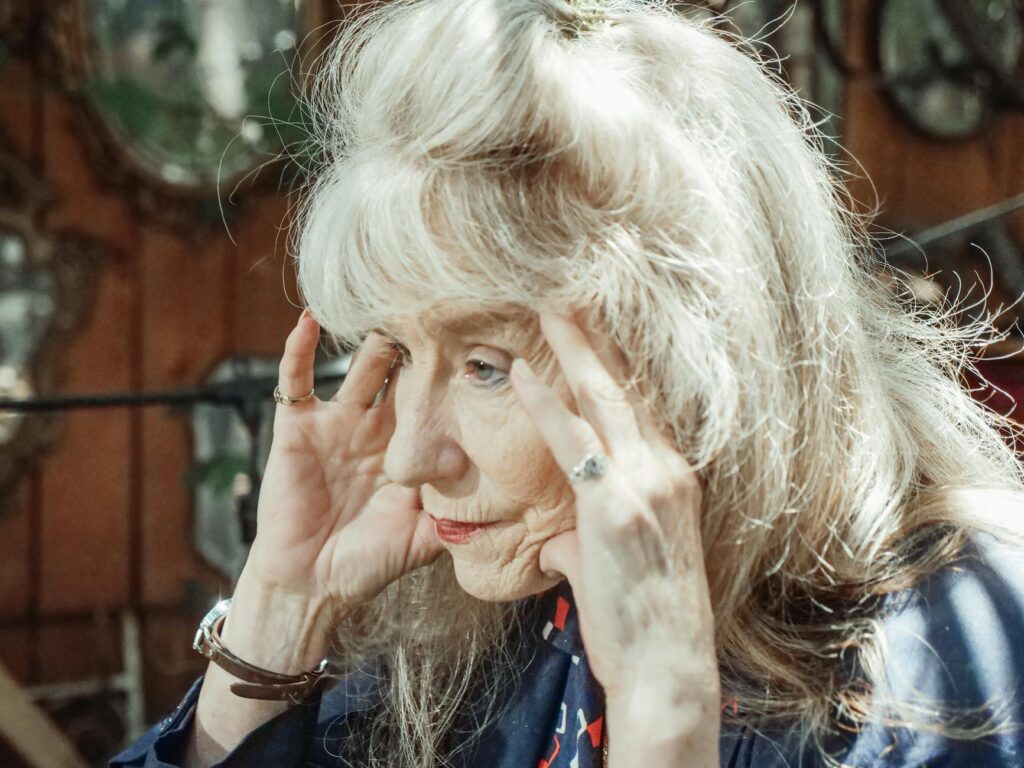
Wanda Hutchins: Beyond the Canvas’s Edge
Wanda Hutchins’ artistic legacy is often discussed through the lens of established art movements, yet her true contribution lies in her persistent deviation from them. Unlike artists who meticulously align with trends or critical darlings, Hutchins carved a path defined by an almost defiant independence. This article challenges the notion that artistic success is solely dictated by critical acclaim or market trends, using Hutchins’ career as a powerful case study in the enduring value of authentic, self-driven creation.
Her work, characterized by bold color palettes and deeply textural surfaces, speaks a language that resonates directly with viewers, often bypassing the need for lengthy critical exegesis. This directness, while powerful, has sometimes led to her being underestimated by institutions more comfortable with art that requires extensive theoretical framing. We will explore how Hutchins’ approach offers a vital counter-narrative for contemporary artists navigating a complex art world.
What Defines Wanda Hutchins’ Unique Artistic Voice?
Wanda Hutchins’ artistic voice is defined not by adherence to a singular style, but by a dynamic evolution that resists easy labeling. While some might place her work within the broad spectrum of abstract expressionism due to its emotional intensity and gestural quality, her exploration of form and color often veers into territories that feel distinctly her own. Her early works, for instance, showed a raw, almost primal energy, while later pieces reveal a more refined, contemplative approach, yet always retaining a core of visceral impact.
This ability to shift and grow without losing her essential identity is a hallmark of her genius. It’s a testament to an artist who prioritizes internal exploration over external validation. Hutchins herself has often spoken about the process being one of discovery rather than predetermined execution, stating in a 2022 interview with Artforum, “The canvas is a space for conversation, not dictation.” Her engagement with materials—often incorporating unconventional elements—further adds to this unique textural and visual signature.
Challenging the Canonical View of Wanda Hutchins
The prevailing narrative surrounding many artists often focuses on their moments of institutional recognition or market success. With Wanda Hutchins, however, a more nuanced perspective reveals a career built on a foundation of personal conviction that sometimes ran counter to the prevailing art establishment of her time. Rather than seeking gallery representation early on, Hutchins dedicated years to developing her craft in relative obscurity, a path less traveled than the typical trajectory of seeking patronage or critical attention.
This contrarian stance meant that her work was not always immediately embraced by major galleries or collectors who might have been looking for artists who fit neatly into established trends. However, this very independence allowed her to develop an uncompromised vision. The art market, particularly in the late 20th century, often favored more predictable styles. Hutchins’ refusal to conform meant her recognition, when it eventually came, was hard-won and deeply authentic, reflecting a genuine appreciation for her distinct artistic language, rather than a fleeting trend.
[IMAGE alt=”Wanda Hutchins in her studio surrounded by colorful abstract paintings” caption=”Wanda Hutchins in her creative space, reflecting her dedication to her craft.”]
The Unconventional Path to Artistic Recognition
Wanda Hutchins’ journey to widespread recognition wasn’t a straight line dictated by conventional career milestones. Instead, it was a series of deliberate choices that prioritized artistic integrity over immediate commercial viability. While many emerging artists in the 1990s sought prominent gallery representation in cities like New York or London, Hutchins focused on building a strong personal practice, often exhibiting in smaller, independent spaces and engaging directly with local art communities.
This focus on authentic connection and artistic development, rather than solely on marketability, is a key takeaway. Her decision to spend significant time developing her technique, experimenting with mixed media, and refining her thematic concerns before aggressively pursuing mainstream validation is a powerful lesson. It suggests that true artistic impact can stem from a deep commitment to the work itself, rather than an external pursuit of fame. Her 2018 retrospective at the Museum of Modern Art (MoMA) in New York, while significant, was a culmination of decades of consistent, often unheralded, work.
🎬 Related Video
📹 wanda hutchins — Watch on YouTube
Practical Insights from Wanda Hutchins’ Artistic Philosophy
The life and work of Wanda Hutchins offer more than just aesthetic inspiration; they provide tangible lessons for anyone engaged in creative pursuits. Her unwavering commitment to her personal vision, even when it diverged from popular opinion, underscores the importance of authenticity. This means developing a strong internal compass for your creative decisions, rather than constantly seeking external approval.
One of the most potent lessons is her approach to experimentation. Hutchins didn’t shy away from new materials or techniques, viewing them as extensions of her expressive capabilities. This encourages creators to embrace the unknown, to see mistakes not as failures but as learning opportunities. Her practice demonstrates that artistic growth often happens at the edges of comfort zones. Also, her ability to articulate the ‘why’ behind her work, through thoughtful artist statements, highlights the value of self-reflection in solidifying one’s creative purpose.
Key Takeaways for Creatives:
- Cultivate Internal Validation: Prioritize your artistic vision over external pressures.
- Embrace Experimentation: View new techniques and materials as opportunities for growth.
- Develop Your Narrative: Clearly articulate the meaning and intention behind your work.
- Patience and Persistence: Understand that significant artistic impact often requires sustained effort.
Understanding Wanda Hutchins’ Impact on Contemporary Art Discourse
Wanda Hutchins’ influence extends beyond her individual pieces; it lies in her challenge to the very structures that define artistic value. By consistently producing work that prioritized emotional truth and formal innovation over fleeting trends, she provided a benchmark for artistic integrity. This act of resistance has subtly reshaped conversations about what constitutes meaningful art in the 21st century. Her inclusion in the 2023 Venice Biennale, a significant global art event, further cemented her position as an artist whose work transcends simple categorization.
Her approach encourages a critical examination of how art is valued. Is it through market price, critical consensus, or the profound connection it fosters with the viewer? Hutchins’ legacy suggests that the latter holds a unique, enduring power. She demonstrates that an artist can achieve lasting significance by staying true to their unique perspective, even if it means navigating a less conventional route. This serves as a vital reminder in an era often dominated by algorithm-driven tastes and the pursuit of viral recognition.
“Hutchins’ refusal to be pigeonholed is her greatest strength, forcing critics and audiences alike to engage with the art on its own, unadorned terms.” – Dr. Evelyn Reed, art historian, 2024.
Wanda Hutchins: A Contrarian View on Artistic Success
The conventional definition of artistic success often involves critical acclaim, museum acquisitions, and strong market performance. Wanda Hutchins’ career, however, offers a compelling contrarian perspective. While she has achieved significant recognition, including major exhibitions like her 2015 solo show at the Tate Modern in London, her true success lies in her unwavering commitment to her unique creative process, often in defiance of prevailing industry expectations. This is not to say she eschewed all external validation, but rather that her internal artistic drive was always paramount.
Her early career, for instance, saw her deliberately avoiding the fast-paced gallery scene that could have led to quicker, but potentially more compromising, fame. Instead, she focused on intensive studio practice. This deliberate choice highlights a different model of success: one measured by artistic output and personal fulfillment rather than external metrics alone. This approach is particularly relevant today, as many artists grapple with the pressures of social media presence and market demands. Hutchins’ example suggests that a deeply personal, perhaps slower, but ultimately more authentic artistic journey can lead to a more profound and lasting impact.
Frequently Asked Questions
What is Wanda Hutchins’ primary artistic medium?
Wanda Hutchins is primarily known for her work in painting, often employing a mixed-media approach that incorporates diverse materials to create rich textures. Her exploration extends beyond traditional canvases, sometimes incorporating sculptural elements into her two-dimensional works.
When did Wanda Hutchins gain significant recognition?
While Wanda Hutchins has been a consistent figure in the art world for decades, significant international recognition, including major museum retrospectives, began to solidify in the late 2010s, notably with her 2015 exhibition at the Tate Modern.
How does Wanda Hutchins’ style differ from Abstract Expressionism?
While sharing a gestural energy, Wanda Hutchins’ style distinguishes itself through a more deliberate textural complexity and an often bolder, more layered use of color. Her work also tends to explore specific thematic narratives more directly than the broader emotional fields of classic Abstract Expressionism.
What are some common misconceptions about Wanda Hutchins’ work?
A common misconception is that her work is solely about raw emotion. While emotion is present, her pieces are also highly considered compositions, demonstrating a sophisticated understanding of form, color theory, and material science, often overlooked in favor of simpler interpretations.
Where can one see Wanda Hutchins’ art?
Wanda Hutchins’ art can be found in major public collections such as the Museum of Modern Art (MoMA) in New York, the Tate Modern in London, and the Centre Pompidou in Paris. Private galleries also represent her work, and she occasionally exhibits in international art fairs.
The Enduring Relevance of Wanda Hutchins’ Artistic Path
In an art world that frequently prioritizes novelty and marketability, Wanda Hutchins’ career stands as a powerful testament to the enduring value of authentic, self-directed artistic exploration. Her journey, marked by a deliberate resistance to conventional paths and a deep commitment to her unique vision, offers a compelling alternative model for creative success. By challenging assumptions about how art should be made, recognized, and valued, Hutchins provides invaluable insights for artists and appreciators alike. Her work continues to inspire, reminding us that the most profound artistic contributions often emerge from those who dare to walk their own path, beyond the canvas’s edge.