Forensic Science in True Crime: A 2026 Perspective
This guide covers everything about The Evolution of Forensic Science in True Crime Investigations. The way we solve crimes has undergone a seismic shift, largely thanks to the incredible advancements in forensic science. What was once a field relying on basic observation and rudimentary tools has exploded into a sophisticated discipline, transforming true crime investigations. As of May 2026, the impact of these scientific leaps is undeniable, offering hope for justice in cases that might have once gone cold.
Last updated: May 5, 2026
Key Takeaways
- Forensic science has evolved from simple observation to complex analysis like DNA profiling and digital forensics.
- DNA analysis has revolutionized cold case investigations, providing definitive links between suspects and crime scenes.
- Digital forensics uncovers crucial evidence from devices, changing how cybercrimes and traditional crimes are investigated.
- Trace evidence, like fibers and soil, offers subtle yet powerful clues when examined with advanced microscopy and chemical analysis.
- The ethical application and interpretation of forensic evidence remain critical for ensuring justice.
From Fingerprints to DNA: The Biological Revolution
The late 19th and early 20th centuries saw the dawn of systematic forensic identification, with fingerprinting being one of the earliest widely adopted techniques. Fingerprints offered a unique identifier, a leap from eyewitness accounts and confessions. However, the real major shift arrived with the advent of DNA profiling. First developed in the late 1980s, DNA analysis allows scientists to identify individuals with an astonishing degree of certainty from minuscule biological samples—hair, saliva, blood, and skin cells.
Practically speaking, this means that even decades-old cold cases can be reopened and solved. A forgotten sample from a crime scene, once useless, can now be analyzed to potentially link it to a modern suspect or exonerate an innocent person. According to the National Institute of Justice (NIJ), DNA evidence has been instrumental in over 200 wrongful conviction exonerations since 1989, highlighting its power in both prosecuting the guilty and protecting the innocent.
The Digital Detective: Unraveling Cyber and Traditional Crimes
In our increasingly connected world, digital forensics has become indispensable. This branch of forensic science deals with recovering and investigating material found in digital devices, often in relation to computer crime. But its reach extends far beyond cyber offenses. Phones, computers, smart home devices, and even vehicles store vast amounts of data—call logs, messages, search histories, location data—that can provide critical context or direct evidence in almost any type of crime.
Consider a case where a victim’s phone contains deleted text messages that detail a threat from a suspect. Or a burglary where surveillance footage from a neighbor’s smart doorbell captures the perpetrator’s vehicle. The challenge, however, is the sheer volume of data and the rapid evolution of technology. As of 2026, forensic analysts are constantly adapting to new devices and data encryption methods. The FBI’s Digital Forensics Services Unit, for instance, handles an immense caseload, underscoring the growing reliance on this field.
The Subtle Clues: Trace Evidence and Microscopy
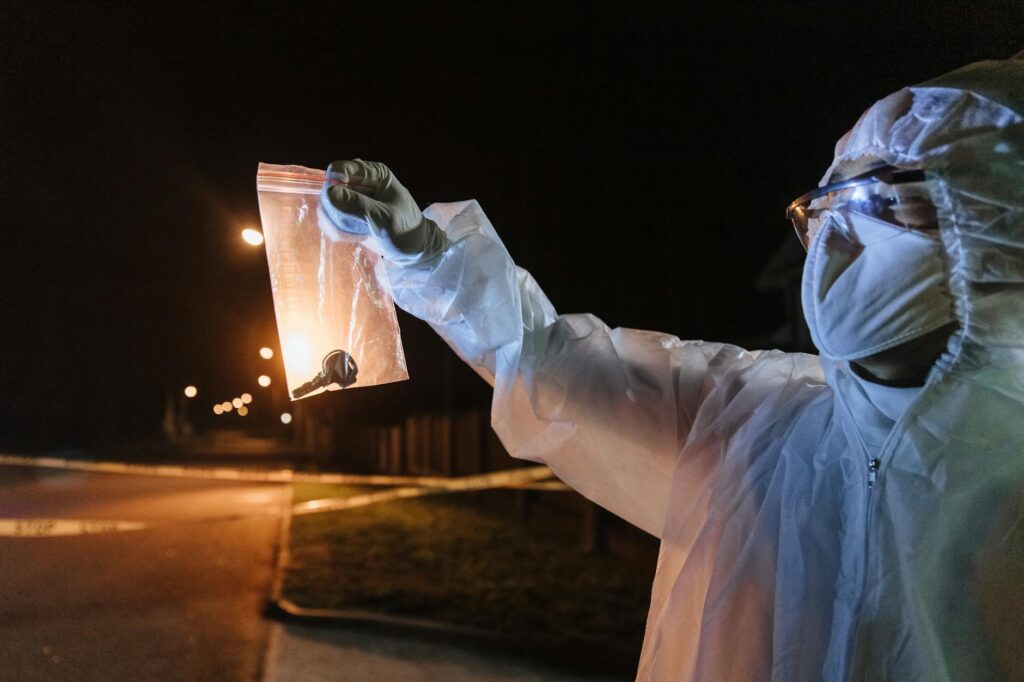
Trace evidence refers to small but significant physical evidence left behind at a crime scene or transferred between a suspect and a victim. This can include fibers from clothing, hair, paint chips, glass fragments, soil, and gunshot residue. While seemingly insignificant individually, the microscopic analysis of these materials can provide powerful corroborating evidence.
For example, a fiber found on a victim’s clothing might match the carpet of a suspect’s car. A unique paint chip from a hit-and-run accident can be traced back to a specific vehicle. Advanced microscopy techniques, like scanning electron microscopy (SEM), allow forensic scientists to examine these tiny particles with incredible detail, revealing their chemical composition and origin. According to a review in the Journal of Forensic Sciences, the proper collection and analysis of trace evidence can help link suspects to scenes and vice versa, often with compelling results.
Beyond the Physical: Forensic Psychology and Profiling
While not strictly a ‘physical’ science, forensic psychology plays a crucial role in understanding the ‘why’ behind a crime. Forensic psychologists apply psychological principles to criminal investigations. They can assess the mental state of defendants, assist in jury selection, and develop behavioral profiles of unknown offenders—often referred to as criminal profiling.
Criminal profiling, popularized by the FBI’s Behavioral Analysis Unit, attempts to infer characteristics of a perpetrator—such as age, background, and behavioral patterns—based on the nature of the crime committed. While controversial and not always definitive, it can help investigators narrow down suspect pools and focus their efforts. Remember that profiling is a tool to guide investigation, not a substitute for concrete evidence. As of May 2026, the integration of psychological insights remains a complex but vital component of complete true crime investigations.
Forensic Toxicology: Understanding the Role of Substances
Forensic toxicology is the science of poisons and drugs and their application to criminal investigations. It involves identifying and quantifying the presence of alcohol, illegal drugs, prescription medications, and poisons in a person’s body. This is critical in cases involving suspected overdose, poisoning, impaired driving, or as contributing factors in homicides.
For instance, in a DUI case, a blood or urine test analyzed by a forensic toxicologist can determine the level of intoxication. In a suspected poisoning death, the toxicologist searches for specific toxins in biological samples. The American Academy of Forensic Sciences (AAFS) recognizes toxicology as a key discipline, emphasizing the need for rigorous scientific methods and validated laboratory procedures to ensure accurate and reliable results in court.
Ballistics and Firearms Examination
Ballistics is the science of firearms, bullets, and projectiles. Forensic ballistics experts examine firearms, ammunition, and residue to determine the type of weapon fired, the distance from the target, and whether a specific firearm was used in a crime. They analyze bullet markings, cartridge cases, and gunshot residue (GSR) left on clothing or skin.
For example, unique striations left on a bullet as it travels through a gun barrel act like a fingerprint for that specific firearm. If a bullet recovered from a crime scene matches these striations from a suspect’s weapon, it provides a strong link. The FBI’s Firearms and Tool marks Unit uses sophisticated comparison microscopes and databases to match evidence found at crime scenes to firearms.
Forensic Anthropology: Giving Voice to the Unidentified
Forensic anthropology is the application of skeletal biology and anatomy to forensic science. Forensic anthropologists are crucial when dealing with unidentified human remains, especially when decomposed or burned. They can determine the species (human or animal), estimate the age, sex, stature, and ancestry of the individual, and identify signs of trauma that may indicate the cause of death.
A striking example comes from mass disaster events. After the 2004 Indian Ocean tsunami, forensic anthropologists played a vital role in identifying thousands of victims. By meticulously analyzing skeletal remains, they helped reunite families with their loved ones and provide closure. Their work is essential in cases where traditional identification methods are impossible.
Crime Scene Reconstruction: Piecing the Narrative
Crime scene reconstruction is the process of determining, through the analysis of crime scene evidence, the sequence of events that occurred during a crime. This involves meticulously documenting and analyzing physical evidence, witness statements, and expert forensic findings to create a coherent narrative of what happened. Forensic scientists and investigators use principles from physics, biology, chemistry, and engineering to interpret blood spatter patterns, bullet trajectories, and the position of evidence.
What this means in practice: imagine a complex scenario with multiple potential entry points and weapon types. By analyzing blood spatter patterns, a forensic analyst can determine the direction of impact, the type of force used, and the position of the victim and assailant. This methodical approach, grounded in scientific principles, is vital for understanding the dynamics of a crime.
Ethical Considerations and Future Trends
While forensic science has advanced dramatically, its application is not without challenges. The potential for human error, contamination of evidence, and the need for rigorous validation of new techniques are constant concerns. As highlighted by numerous wrongful conviction cases, the interpretation of forensic evidence requires careful consideration and transparency. The legal system must ensure that forensic findings are presented clearly and that potential limitations are understood.
Looking ahead, as of May 2026, we see trends towards greater automation in labs, the expanded use of AI in data analysis, and the development of even more sensitive detection methods for substances and biological traces. The integration of bioinformatics and advanced computational modeling promises to further refine our ability to solve complex crimes. The evolution of forensic science in true crime investigations is an ongoing journey, continually pushing the boundaries of what’s possible in the pursuit of justice.
Frequently Asked Questions
What is the most significant advancement in forensic science for true crime?
The most significant advancement is undoubtedly DNA profiling. It offers an unprecedented level of individual identification from biological samples, revolutionizing both conviction and exoneration cases and making it a cornerstone of modern forensic science.
How has digital forensics changed crime solving?
Digital forensics allows investigators to extract crucial evidence from electronic devices. This has transformed the investigation of cybercrimes and provided vital context or direct proof in traditional crimes, from text messages to location data.
Can forensic science always prove guilt or innocence?
No. Forensic science provides evidence, but its interpretation is key. While powerful, it’s one piece of the puzzle. Human interpretation, potential contamination, and the limits of science mean evidence must be considered alongside all other case facts.
What are the challenges in using forensic evidence in court?
Challenges include ensuring evidence integrity, proper chain of custody, expert witness credibility, the potential for bias in interpretation, and keeping pace with rapidly evolving scientific techniques and technologies.
How does forensic entomology help solve crimes?
Forensic entomology uses insect evidence found on remains to estimate the time since death and potentially identify geographic location or movement of a body. This is particularly useful in decomposing cases where other time-dating methods are less reliable.
What is the future of forensic science in investigations?
The future points towards greater integration of AI for data analysis, more sensitive detection methods for trace evidence and toxins, and advancements in areas like genomics and bioinformatics to provide even more precise insights into crimes.
Last reviewed: May 2026. Information current as of publication; pricing and product details may change.
Source: Nature
Editorial Note: This article was researched and written by the Afro Literary Magazine editorial team. We fact-check our content and update it regularly. For questions or corrections, contact us. Knowing how to address The Evolution of Forensic Science in True Crime Investigations early makes the rest of your plan easier to keep on track.